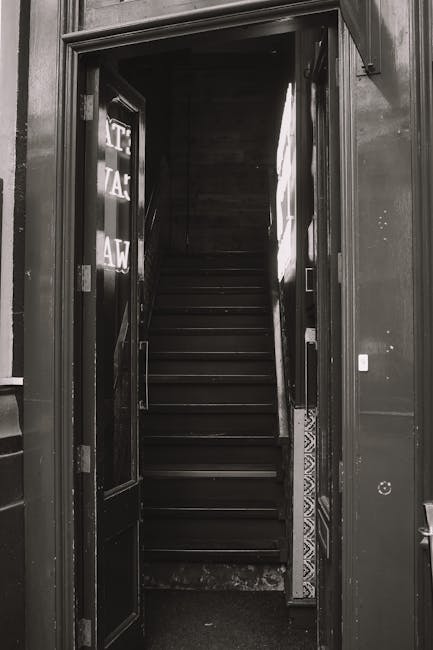
Narrow-stair moves on Mitcham Road -- pro strategies
If you are planning a move in a property with a tight staircase, awkward turns, or a landing that feels about half a metre too small, you already know this is not a normal moving day. Narrow-stair moves on Mitcham Road -- pro strategies are all about making that kind of job calmer, safer, and far less stressful. The good news? With the right planning, the right equipment, and a few professional habits, even a fiddly stairwell can be managed neatly. It just takes a bit more thought upfront, that's all.
In this guide, you will learn how these moves work, what usually goes wrong, and how experienced movers plan around tight access in real London homes. We will also cover practical tools, best-practice checks, and the kind of small details that save time on the day. If you want a broader look at the company behind this kind of support, you can also visit the main site or read more about the team on the about us page.
Table of Contents
- Why Narrow-stair moves on Mitcham Road -- pro strategies Matters
- How Narrow-stair moves on Mitcham Road -- pro strategies Works
- Key Benefits and Practical Advantages
- Who This Is For and When It Makes Sense
- Step-by-Step Guidance
- Expert Tips for Better Results
- Common Mistakes to Avoid
- Tools, Resources and Recommendations
- Law, Compliance, Standards, or Best Practice
- Options, Methods, or Comparison Table
- Case Study or Real-World Example
- Practical Checklist
- Conclusion
- Frequently Asked Questions
Why Narrow-stair moves on Mitcham Road -- pro strategies Matters
Narrow staircases change everything. A move that would be straightforward in a ground-floor flat can become slow, noisy, and physically demanding once you add steep steps, tight landings, low ceilings, or a bend that forces furniture to tilt at an awkward angle. On Mitcham Road, where property layouts can vary quite a bit, that means the move needs to be planned around access, not just around the items themselves.
Why does that matter so much? Because most moving delays happen at the point where a large item meets a small space. A wardrobe that looked fine in the hallway suddenly refuses to pass the newel post. A sofa makes it to the first landing and then stops dead. The team starts measuring, lifting, rotating, and trying again. It is rarely dramatic, but it can be tiring. And tiring is where mistakes creep in.
Professional strategy helps avoid that spiral. It reduces physical strain, lowers the risk of scratches or chipped plaster, and makes the move more predictable. In a city environment, where stairwells can be shared, narrow, and full of odd corners, good planning is not a luxury. It is the difference between a job that feels controlled and one that turns into a day-long puzzle.
Truth be told, a narrow-stair move is often less about brute strength and more about judgment. Which item should go first? Should the bed frame be dismantled completely? Would a temporary pause protect the walls more than pushing through? Those are the quiet decisions that separate a smooth move from an exhausting one.
How Narrow-stair moves on Mitcham Road -- pro strategies Works
The process usually starts before moving day, ideally with a proper access check. An experienced mover will look at the staircase width, the number of turns, head height, the size of landings, and the route from the property to the vehicle. They are not just measuring furniture. They are mapping the movement path.
That route planning matters because many items can fit into the building but not around the corner. A mattress may flex enough to pass. A wardrobe might need to be dismantled. A washing machine may require a different handling plan entirely. So, the work is part measurement, part logistics, part common sense. Not glamorous, but very effective.
In practice, the move often follows a sequence like this:
- Initial survey of access, item sizes, and likely pinch points.
- Sorting items by difficulty so the hardest pieces are not tackled last when everyone is worn out.
- Dismantling large or awkward furniture where needed.
- Protecting stair rails, corners, walls, and floor edges with covers or padding.
- Moving items with controlled lifting, rotating, and, where appropriate, team coordination.
- Checking each landing and turning point before committing to the next step.
The best teams do not rush the stairwell. They pause, look, and then move. That sounds simple, but it is where a lot of damage is avoided. A second pair of eyes at the top of the stairs can be incredibly useful. You might be surprised how often a slight tilt is enough to solve a problem.
There is also a mindset shift here. Instead of treating narrow stairs like an obstacle to bully through, professionals treat them like a route to be solved. That subtle difference changes everything.
Key Benefits and Practical Advantages
When narrow-stair moving is handled properly, the benefits show up quickly. You save time, protect your belongings, and reduce the chance of injury. In a busy stretch like Mitcham Road, that can also mean less disruption for neighbours, less noise in the building, and fewer awkward moments in a shared hallway. Nobody wants to be the person blocking the stairwell while trying to angle a dresser past a corner. Let's face it, that gets old fast.
Here are the main practical advantages:
- Less damage risk: Proper padding and controlled handling reduce scuffs, dents, and chips.
- Better use of labour: People are not wasting energy on repeated failed attempts.
- Faster decisions: Clear planning helps the team decide what to dismantle, what to carry, and what to protect.
- Reduced stress: You feel more in control when the route has been checked properly.
- Safer lifting: Good technique reduces the chance of strain or slips on stairs.
There is also a quieter benefit that people sometimes miss: confidence. Once the team knows the access plan, they move more decisively. That confidence can be infectious. The whole move feels steadier.
Expert summary: narrow-stair moves work best when the access route is treated as the main project, not an afterthought. Measure first, protect the property, split awkward items early, and keep communication simple on the day.
Who This Is For and When It Makes Sense
This kind of move is relevant if you live in or are moving into a property with stairs that are too tight for comfortable carrying. That includes maisonettes, older terraced homes, converted flats, upper-floor rentals, and any building where the staircase feels like it was designed before modern furniture existed. Which, to be fair, is sometimes exactly the case.
It is especially useful if you have:
- large wardrobes, beds, or sofas
- heavy white goods
- fragile items that should not be bounced around on stairs
- a difficult landing or turn
- shared access where you need to keep things tidy and efficient
It also makes sense if you are short on time or moving on a weekday when access windows are tight. In those situations, every extra trip up and down stairs matters. A careful plan can save a surprising amount of effort.
If you are unsure whether your item will fit, that is usually a sign to plan for dismantling or specialist handling. Better to have that conversation early than discover the issue halfway through the job with everyone standing on the landing trying not to look annoyed. We have all seen that moment.
Step-by-Step Guidance
Here is the practical version. Not fancy, just useful.
1. Measure the staircase and the furniture
Start with width, ceiling clearance, landing depth, and turn radius. Then measure the longest, widest, and most rigid items you need to move. A quick measuring tape check can save a lot of guessing later. If an item has a fixed frame or a bulky arm, assume it will be harder than it looks.
2. Identify the awkward pieces first
Do not leave the trickiest item until the end. Put beds, wardrobes, large sofas, and appliances near the top of the plan. The reason is simple: if a big piece needs dismantling or a different route, you want to know that before the team is tired.
3. Decide what should be dismantled
Many items are easier and safer when broken down into manageable sections. Beds, modular furniture, and some desks often travel better in pieces. Keep fittings in labelled bags so reassembly does not become a treasure hunt. Nobody enjoys hunting for six nearly identical screws at 9 p.m.
4. Protect the property
Use coverings for corners, banisters, and flooring where scuffs are likely. Even a small bump can mark paint or chip a wall edge. Protective wrapping is one of those things that looks unnecessary until it saves the day.
5. Communicate clearly on the stairs
One person should lead the movement and give simple instructions. Short cues work best: stop, lift, rotate, pause. Overexplaining on a staircase can make people hesitate at exactly the wrong moment.
6. Test the path before committing
When possible, do a dry run with the item angled carefully. If it catches, stop and rethink. This is where pro strategies really matter. A small adjustment early is much easier than forcing an item and risking damage.
7. Finish with a final check
Once the item is through, inspect walls, banisters, and the staircase itself. It is faster to deal with a minor scuff immediately than to find it later after the moving team has already left.
Expert Tips for Better Results
There are a few habits that make narrow-stair moves feel much more manageable. Small things, but they add up.
- Use the right carry team size: Too few people creates strain; too many can crowd the staircase.
- Keep one route clear: Remove loose rugs, shoes, plant pots, and anything else that might snag feet.
- Wrap before you move: Don't wait until an item is on the stairs.
- Think in angles: Many awkward items fit only when turned diagonally or carried upright.
- Watch the landing first: A landing can be the real bottleneck, not the steps themselves.
One useful habit is to stop and reassess after each large item. It sounds slower, but it often speeds things up overall because you avoid repeating the same mistake twice. That bit matters more than people think.
If you are coordinating the move yourself, keep the communication calm and boring. Boring is good here. The stairs do not care about drama.
Common Mistakes to Avoid
The biggest mistake is assuming a narrow staircase is just a slightly slower version of a normal move. It is not. It changes the entire method. Here are the errors that most often create avoidable headaches:
- Skipping measurements: Guessing usually leads to delays.
- Forcing large furniture through: If it does not fit cleanly, stop.
- Not protecting the property: A quick move can still leave damage.
- Leaving dismantling too late: Once everyone is on site and in a hurry, patience drops.
- Poor communication: Mixed instructions on stairs are a recipe for awkward pauses.
- Ignoring fatigue: Tired people make poor lifting choices.
A less obvious mistake is underestimating how noisy a move can be in a shared building. Stair rails, door frames, and heavy feet on wooden steps all create sound. That may not matter to you personally, but it matters in flats and conversions where neighbours are close by. A quieter, more controlled approach is usually the better one.
And yes, sometimes the "quick lift" is the slowest option of all. Annoying, but true.
Tools, Resources and Recommendations
You do not need a warehouse full of specialist gear for every move, but the right basic tools make a big difference. For narrow stairs, the useful kit tends to be practical rather than fancy.
| Tool or item | What it helps with | Why it matters on narrow stairs |
|---|---|---|
| Furniture blankets | Surface protection | Reduce scuffs on walls, rails, and corners |
| Stretch wrap | Securing loose parts | Keeps drawers, doors, and cushions under control |
| Ratchet straps | Holding bulky items together | Helps when rotating awkward loads |
| Hand truck or dolly | Moving stable items | Useful where the stair geometry allows safer support |
| Labels and bags | Organisation | Makes dismantled furniture easier to rebuild later |
For many households, the smartest resource is not a piece of kit at all but an honest pre-move conversation. If you need help with storage, packing, or the moving process more broadly, the team at contact us can be a sensible place to start. When access is tricky, a clear conversation early on tends to pay off later.
If you want to understand how service and support are handled, it can also help to review the terms and conditions and privacy policy. That way, you know how information is handled and what to expect before the day arrives. Plain English beats surprises.
Law, Compliance, Standards, or Best Practice
For a move like this, the most important compliance point is straightforward: work safely and avoid preventable damage or injury. In the UK, professional movers are expected to follow sensible manual handling practices, use suitable equipment, and take reasonable care in shared or private premises. The exact approach can vary depending on the property, the items, and the circumstances, so it is best to treat each job individually.
In practical terms, best practice usually means:
- using safe lifting techniques and team coordination
- protecting property where contact is likely
- not carrying more than is safe for the route
- checking access in advance rather than improvising under pressure
- respecting building rules, neighbour access, and shared areas
If a staircase looks unsafe, too cramped, or unsuitable for a particular item, the responsible decision is often to dismantle further, adjust the route, or use another method. That is not overcautious. That is professional judgment. The safest move is usually the one that looks slightly slower on paper.
Options, Methods, or Comparison Table
There is more than one way to handle a narrow-stair move. The right choice depends on the item, the building, and how much risk you want to tolerate. Here is a simple comparison.
| Method | Best for | Pros | Trade-offs |
|---|---|---|---|
| Carry assembled | Smaller, flexible items | Fast, less dismantling | Can fail on tight turns |
| Dismantle first | Wardrobes, beds, desks | Safer fit, less strain | Takes planning and reassembly time |
| Team carry with rotation | Bulky but manageable furniture | Good control on stair turns | Needs clear communication |
| Specialist handling approach | Heavy or fragile items | More confidence and protection | May require extra time and setup |
Most real moves use a mix of these methods. Rarely is it one-size-fits-all. A sofa may need a different plan from a bed base, and a bookcase may be easier on its side than upright. The art is in reading the item and the stairs together.
Case Study or Real-World Example
Picture a typical first-floor flat on Mitcham Road. The staircase is short, but the turn at the bottom is tight, and the landing above is just wide enough for one person to stand comfortably. The client has a double bed frame, a wardrobe, and a sofa that looked fine in the living room but suddenly seems much larger on moving day. Classic.
Instead of trying to move everything in one pass, the team starts with the easiest items and clears space. The bed frame is dismantled first, with fittings bagged and labelled. The wardrobe is measured against the stair width and judged too awkward to carry fully assembled, so it is broken down as well. The sofa is tested on the stairs, rotated gently at the turn, and carried with one person guiding from above.
What makes the difference is not force. It is sequence. The team does not keep retrying the same impossible angle. They pause, change the method, and move on. The whole job stays calmer, and the risk of wall damage drops because no one is trying to win a battle with the staircase.
That is the real lesson, honestly. A narrow-stair move becomes far easier once you stop treating the stairs like an obstacle and start treating them like a design problem.
Practical Checklist
Use this checklist before the move begins:
- Measure all stair widths, landings, and tight corners
- Measure the longest and widest furniture pieces
- Decide which items should be dismantled
- Label screws, fittings, and small parts
- Protect walls, bannisters, and floors
- Clear the staircase and surrounding hallway
- Plan the order of items by difficulty
- Confirm who will lead communication on the day
- Check whether any item needs specialist handling
- Review access instructions before arrival
Quick reminder: if something looks borderline, do not assume it will somehow "just fit" once you start. Borderline usually stays borderline.
Conclusion
Narrow-stair moves on Mitcham Road -- pro strategies are really about reducing friction before the moving day even begins. Measure well, protect the property, dismantle the awkward pieces early, and keep communication simple. Do that, and the whole job becomes more manageable, more efficient, and a lot less stressful.
The best moves feel calm because the hard decisions were made in advance. That is the part people rarely see, but it is where the real value sits. If you are weighing up your options or want to talk through a tricky access layout, it helps to speak to people who understand the practical side of the job, not just the transport side. A little guidance now can save a long, tiring afternoon later.
Get a free quote today and see how much you can save.
And if all you manage today is one careful measurement and one sensible plan, that is still a proper start. Moving can be messy, but it does not have to feel impossible.
Frequently Asked Questions
What makes a narrow-stair move different from a normal house move?
The staircase becomes the main challenge. Tight turns, limited landing space, and low clearance can make furniture handling more difficult, so planning and dismantling matter much more.
How do you know if furniture will fit up a narrow staircase?
Measure the staircase, landings, and the item itself, then compare the item's longest rigid dimensions with the available turning space. If it is close, assume extra care or dismantling will be needed.
Should I dismantle furniture before moving it on narrow stairs?
Often, yes. Beds, wardrobes, desks, and some sofas are much easier to move in sections. It also lowers the risk of damage to walls and the item itself.
What items are usually hardest to move on tight stairs?
Large wardrobes, bulky sofas, mattresses with rigid frames, appliances, and heavy items with awkward weight distribution are usually the trickiest.
Can narrow-stair moves be done safely by one person?
Sometimes for smaller items, but larger or heavier pieces usually need a team. Safe handling on stairs is about balance and control, not just strength.
How do movers protect walls and bannisters?
They use padding, blankets, wrap, and careful positioning. The key is to protect contact points before the item reaches the stairs, not after it starts scraping.
What if an item gets stuck halfway up the stairs?
Stop immediately, avoid forcing it, and reassess the angle. In many cases, the item needs to be rotated differently or dismantled further before another attempt.
Are narrow-stair moves more expensive?
They can be, depending on time, access difficulty, dismantling, and the amount of handling required. The main cost driver is usually labour time, not the staircase itself.
How long does a narrow-stair move usually take?
It varies a lot. A few awkward pieces can add significant time, especially if dismantling or extra protection is needed. The best estimate comes from a proper access check.
What should I tell the moving team before the job starts?
Share staircase measurements, any tight turns, bulky items, floor level, parking or access limitations, and whether anything can be dismantled in advance. Clear information saves time later.
Do I need to worry about building rules or neighbours?
Yes, especially in shared buildings. Keep access clear, minimise noise where possible, and follow any building-specific instructions. A courteous approach goes a long way.
What is the smartest first step if I am planning a move on Mitcham Road?
Measure the access route and the largest items first. Once you know the pinch points, you can decide what to dismantle, what to carry, and what needs extra care.
For more details about the service team or to make contact directly, you can also use the contact page. If you would like to understand the business background a little better, the about us page is a good place to start.